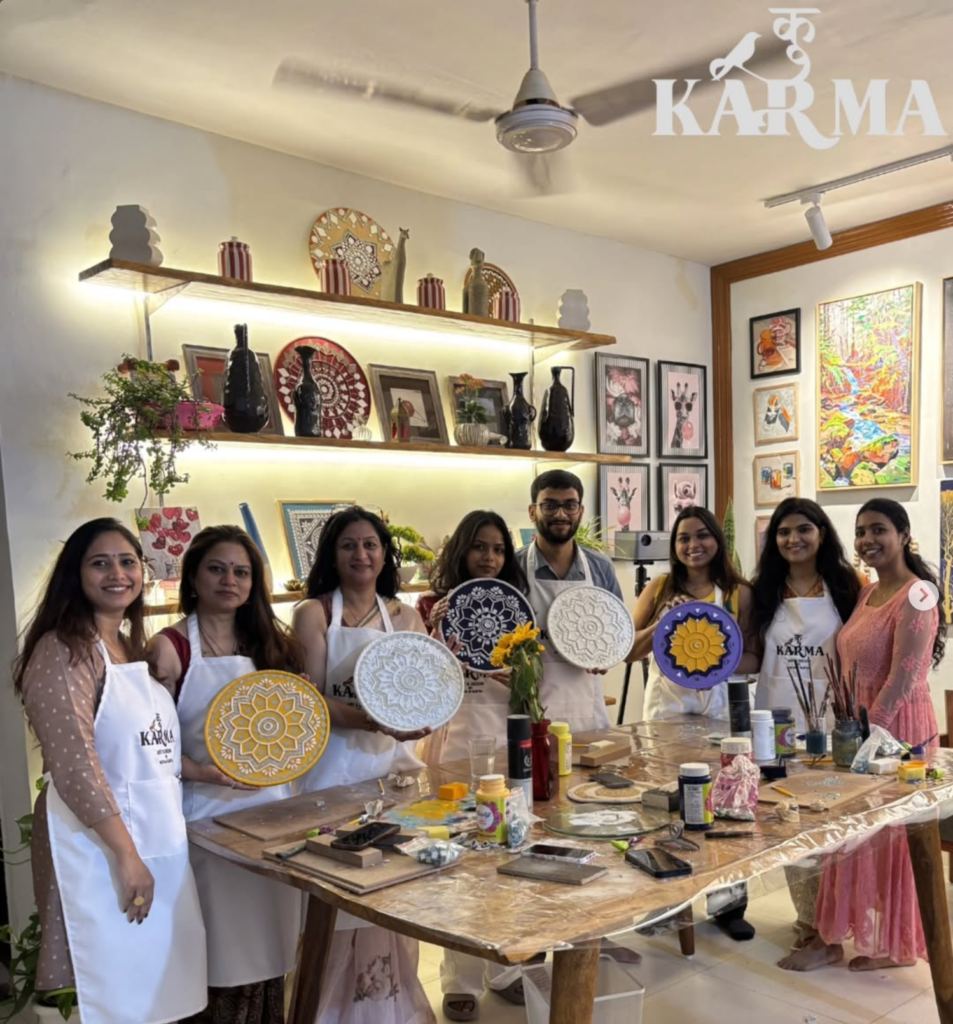
Lippan Art – Workshop
Lippan Art – Introduction, History & Process
Introduction to Lippan Art
Lippan Art, also known as Mud and Mirror Work, is a traditional folk art form originating from the Kutch region of Gujarat, India. This beautiful craft combines natural clay, intricate hand-made patterns, and reflective mirror pieces to create decorative surfaces that sparkle when light falls on them.
Traditionally, Lippan Art was used to decorate the walls of mud houses (Bhungas) in desert villages. The mirrors reflected sunlight during the day and lamp light at night, making homes appear brighter and more vibrant. Today, Lippan Art has evolved into a popular contemporary art form used in wall panels, home décor, murals, and luxury interiors.
The charm of Lippan Art lies in its earthy texture, geometric patterns, floral motifs, and handcrafted elegance, making every piece unique.
Lippan Art is believed to be over 800 years old and has its roots in the desert communities of Kutch, Gujarat.
The craft was primarily practiced by the Rabari, Mutwa, and Meghwal communities, who used locally available materials such as clay, camel dung, and mirrors to beautify their homes. The word "Lippan" comes from the Gujarati term meaning "to apply" or "to plaster".
What we'll do
What we provide
- All the material
- Apron
- Tea & Snacks
What to bring
- Comfortable Clothes
- Short Nails
- Less Jewelleryin hand
A few more views
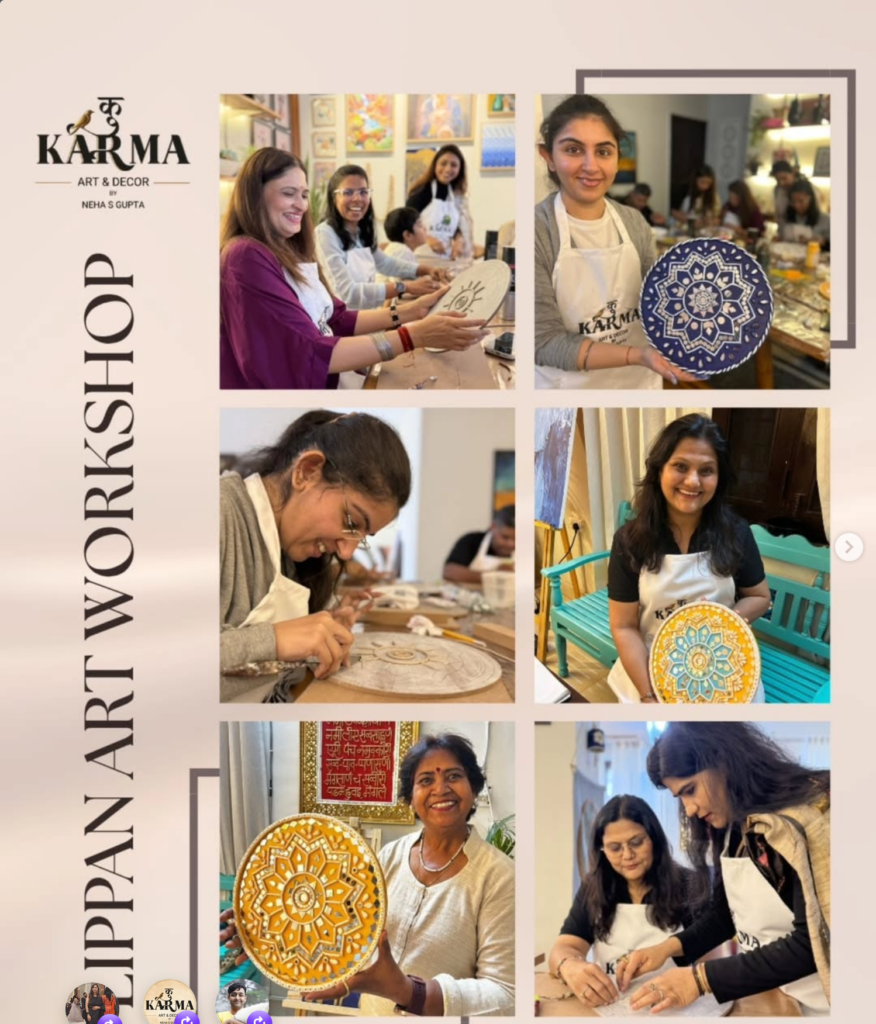
Lippan Art - Workshop
New dates coming soon — check back, or join the waitlist below.